Motors.
In the compact power range the motor decides what the drive can do. We size it for your application — not from a catalogue.
Specified to the operating point.
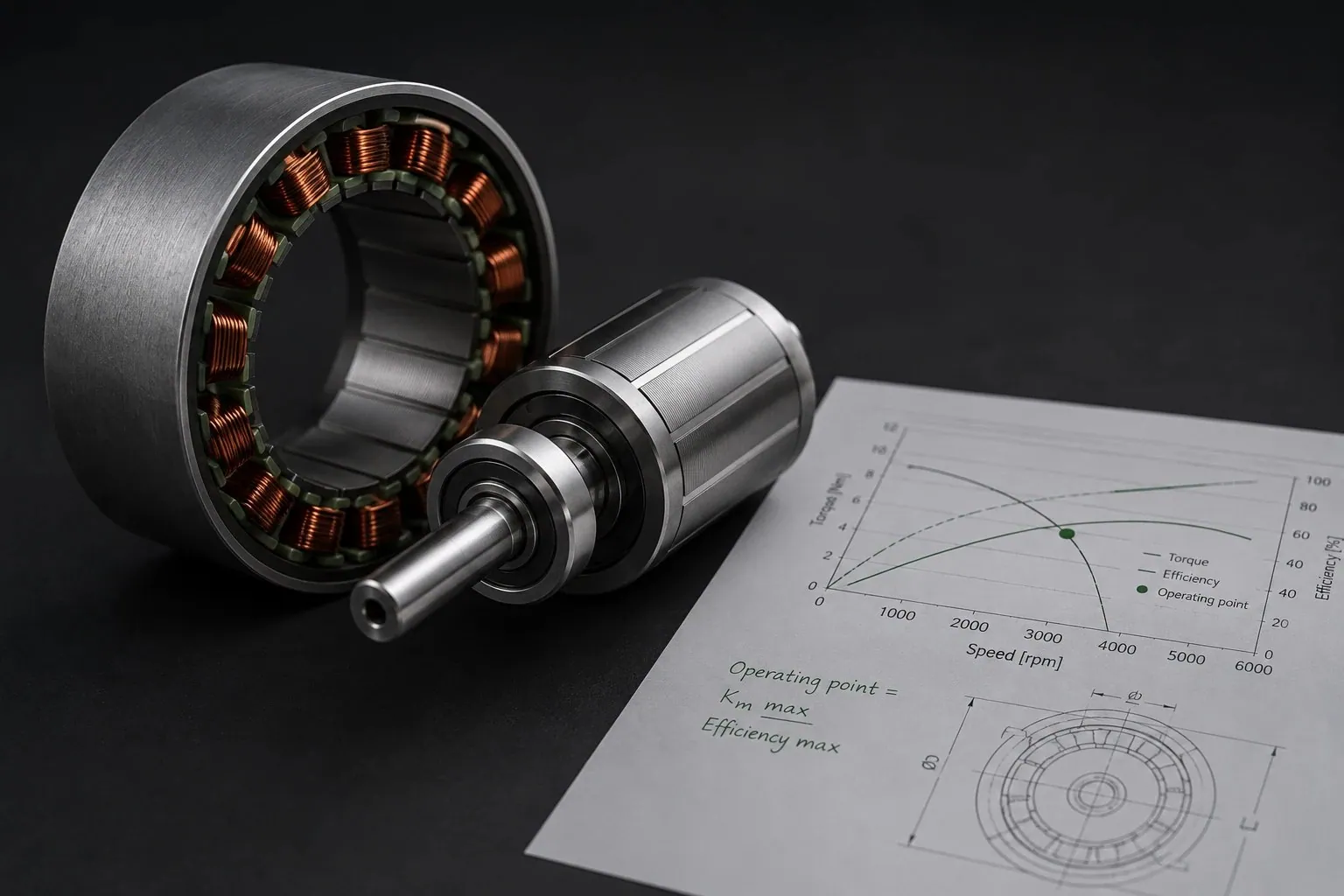
Sized to the operating point, not the nameplate
We size the motor for the torque you need at your duty cycle and ambient temperature. That is the figure your product runs on — the catalogue value is not.
Battery consumption calculated before the first prototype
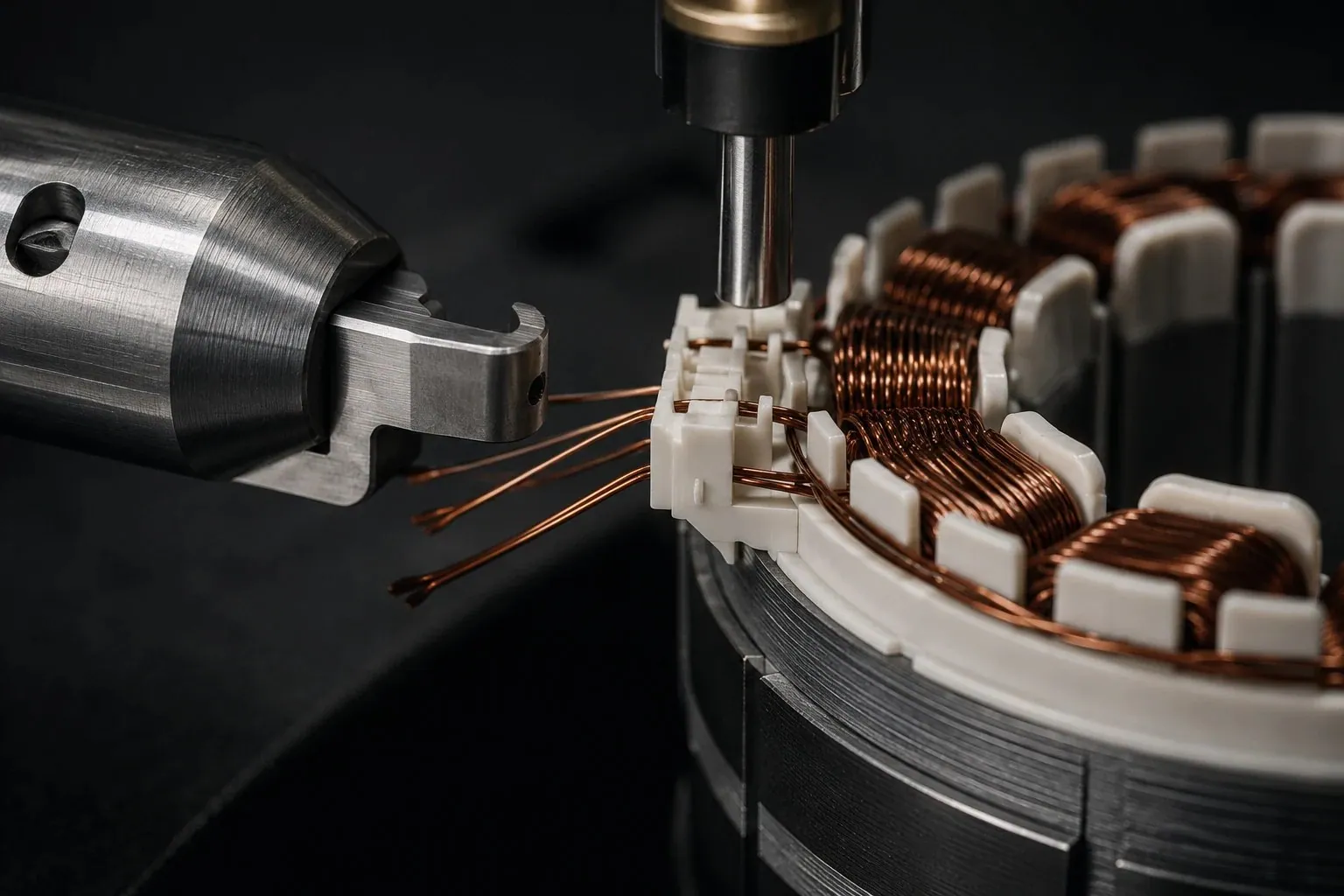
Low-voltage windings, matched to the bus
We match the winding to your supply voltage. That gets the torque your application needs out of the size you have — without moving to a bigger motor.
Winding matched to your supply voltage
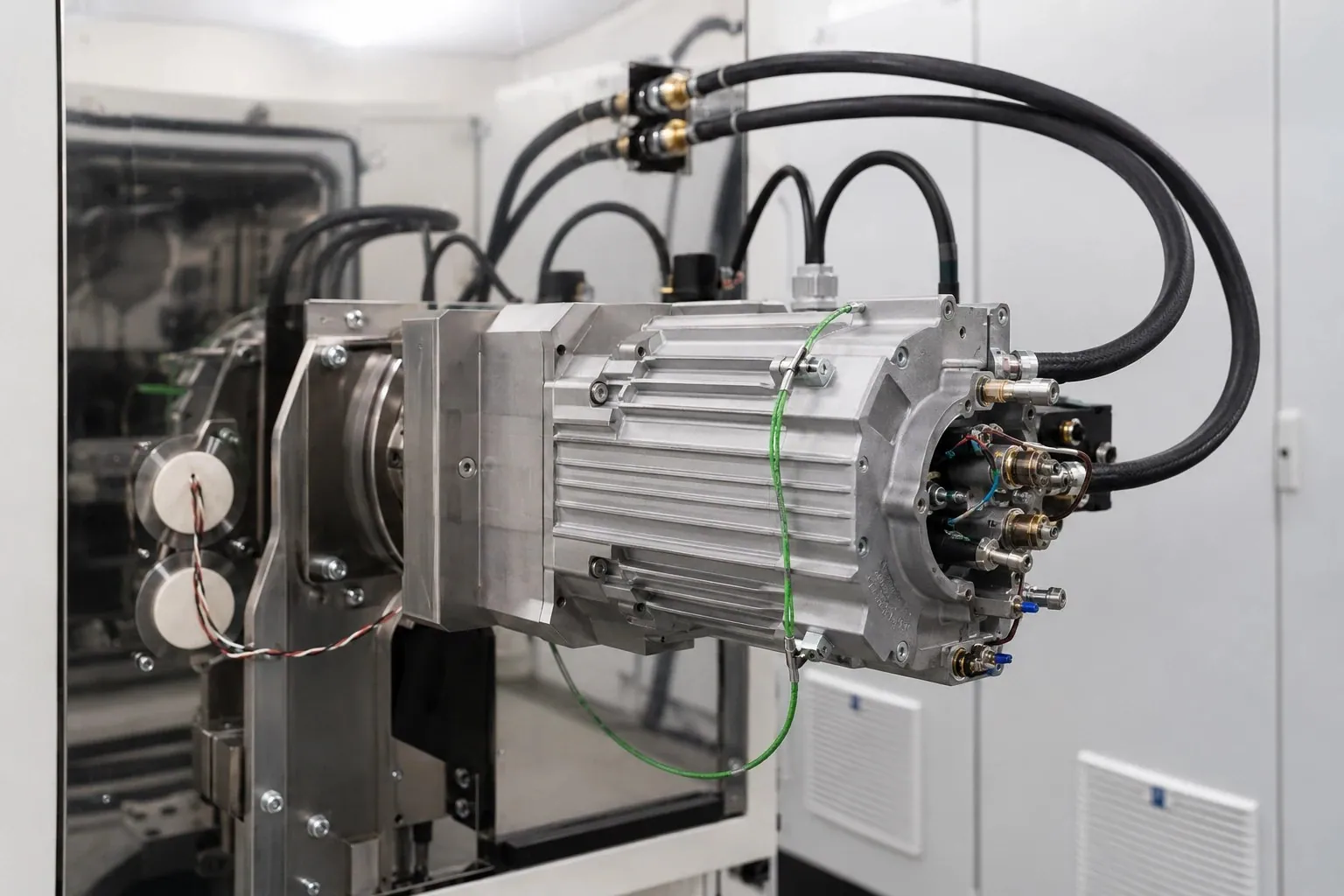
Continuous torque is a thermal question
In this size class heat sets the limit, not magnetics. We design the heat path — potting, case contact, the housing as heatsink — for how and where your product runs.
Rated where your product runs, not on a test bench
the motor’s operating point is set by the gearbox, its smoothness by the sensing and control scheme, its thermal ceiling by the housing. We specify and integrate the machine as part of the whole drive.
How we deliver it — motor topology, winding and magnetics are realised by specialist partners to our specification, so we’re never tied to a single motor line and pick the best-fit machine for each application. The system design, selection and integration are ours.
Let's talk about your application.
Tell us about your drive challenge — we'll find the right solution.