The drive that fits — not the standard product.
We develop tailored drive solutions — motor, gearbox and complete drive unit — engineered for exactly the torque, space and cost your application demands. This is the service for requirements a catalogue can’t meet: non-standard drives, engineered in Austria, developed so they can be built economically.
A drive built around your application — not adapted to it.
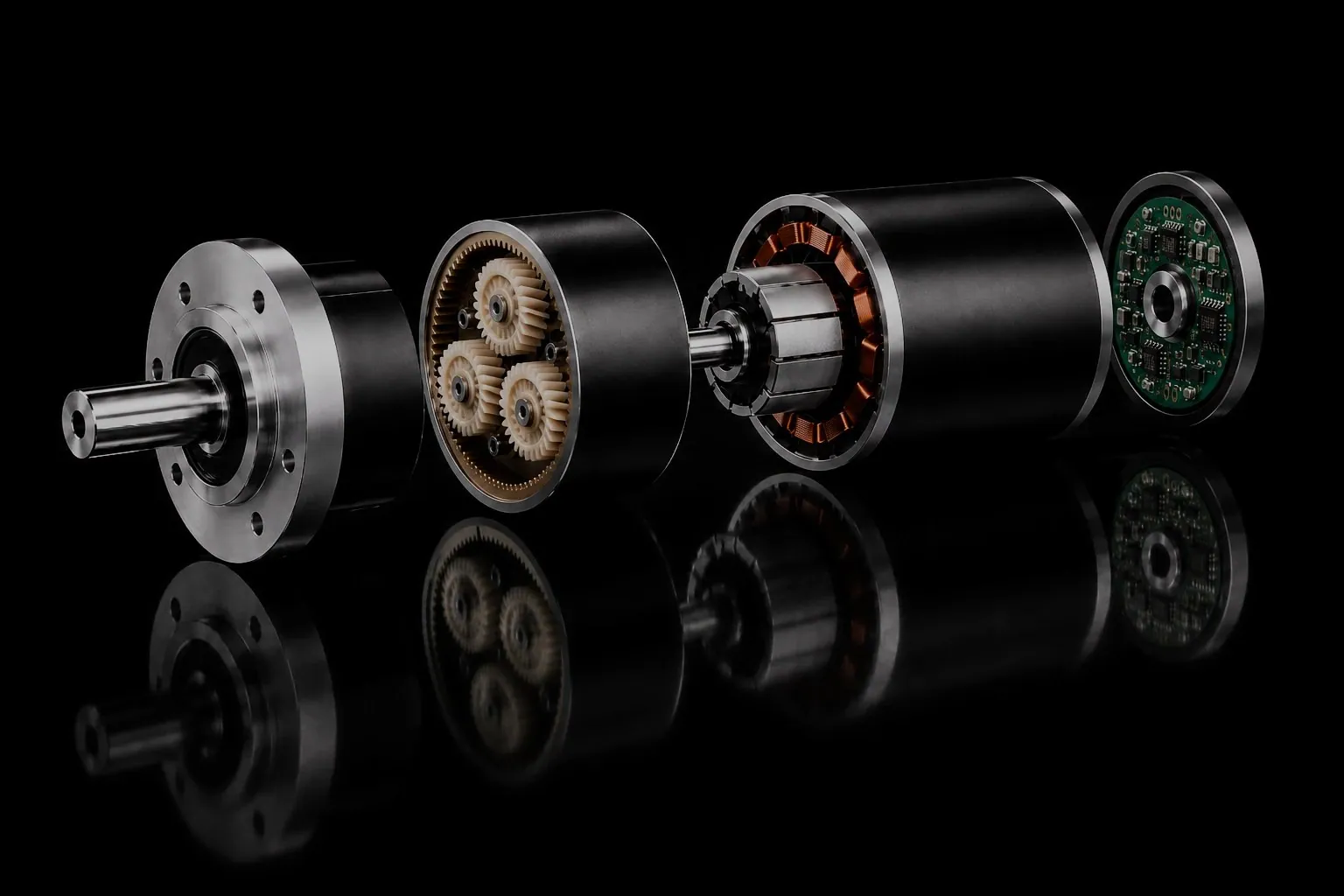
Flange, gearbox, motor, sensing and electronics — every module dimensioned for your case, delivered as one matched unit.
How we get there — from requirement to series.
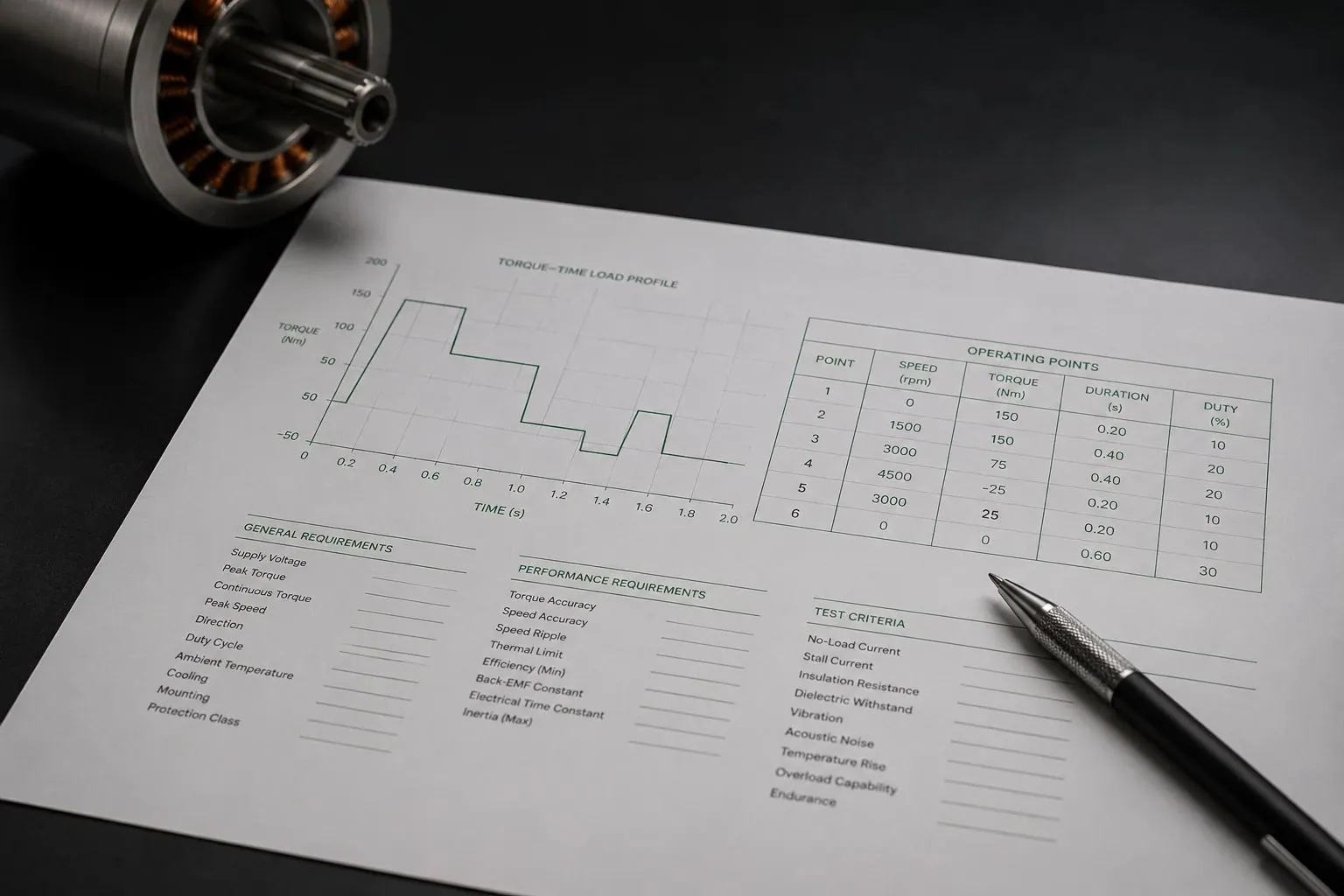
A requirement you can calculate with
Every project starts by turning the application into numbers: the torque–time profile, duty cycle and ambient, the supply and its worst case, the space that’s actually available, the lifetime the product has to survive. From that we write a specification that physics can verify and a supplier can quote — operating points, limits and test criteria, not adjectives. For battery products this includes the energy budget per actuation, in milliamp-hours, before any hardware exists.
You receive — Requirements specification with operating points, limits and test criteria
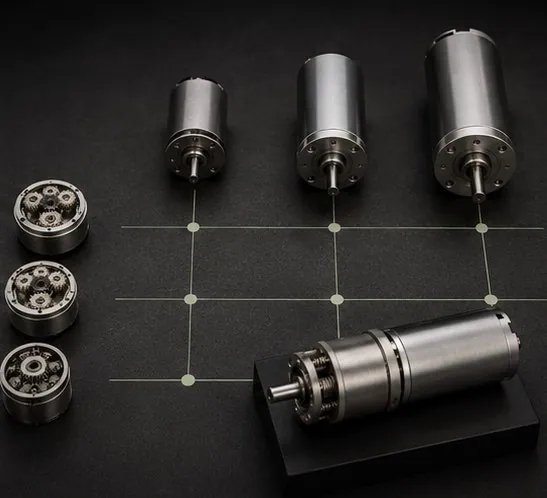
Motor, gearbox and control designed as one
The core decision of every drive is how the disciplines share the work: the gearbox ratio places the motor at its best operating point, the sensing enables the control scheme, the housing sets the thermal ceiling. We run these trades as one system design — technology-open on the motor side, in-house on the gearbox — instead of picking parts from four catalogues and hoping they match. When packaging demands it, that includes non-standard architectures like compound planetary stages with unusually high single-stage ratios.
You receive — System concept: drive architecture, key dimensioning and the trade-off rationale
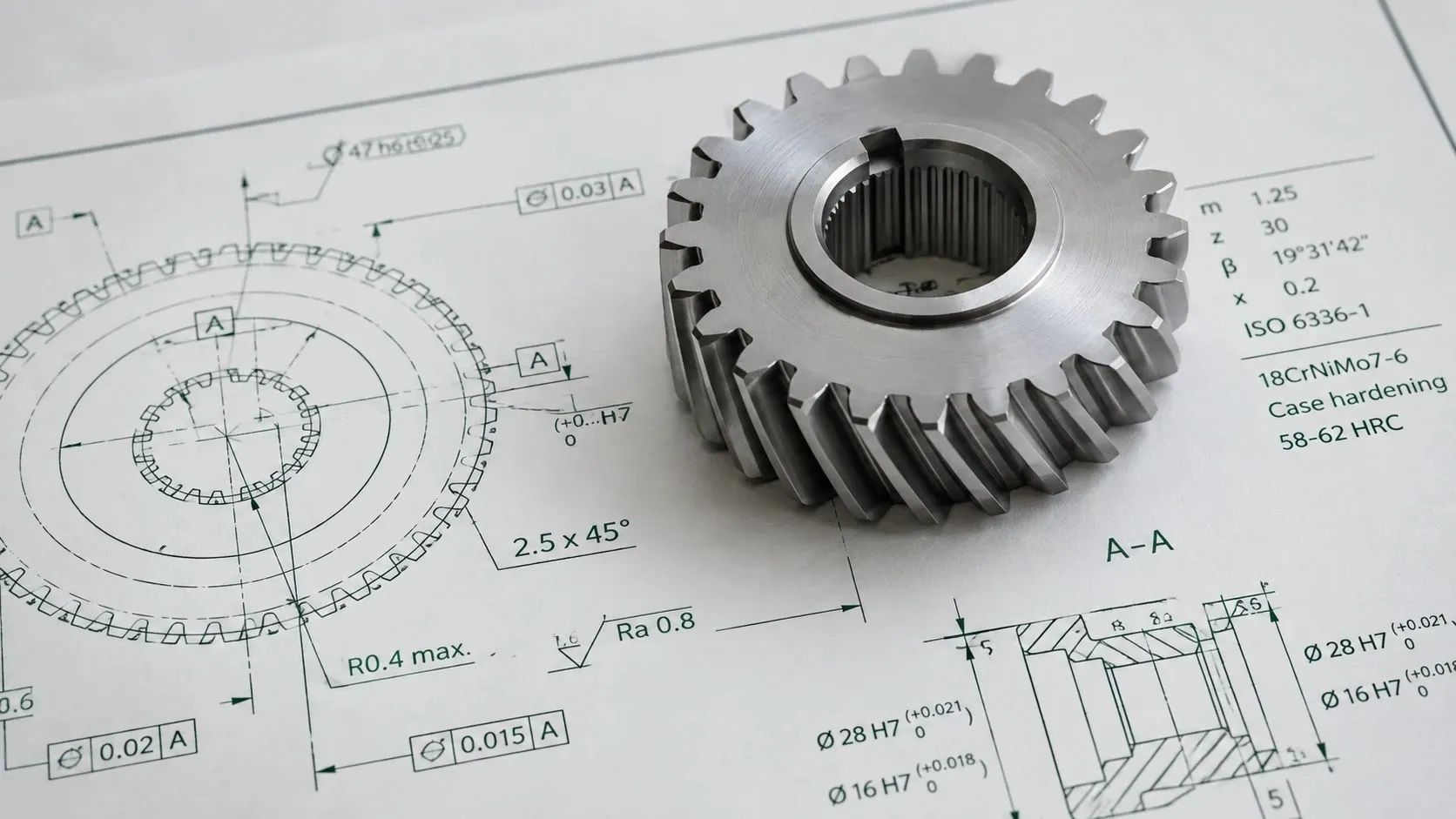
Engineered down to the drawing
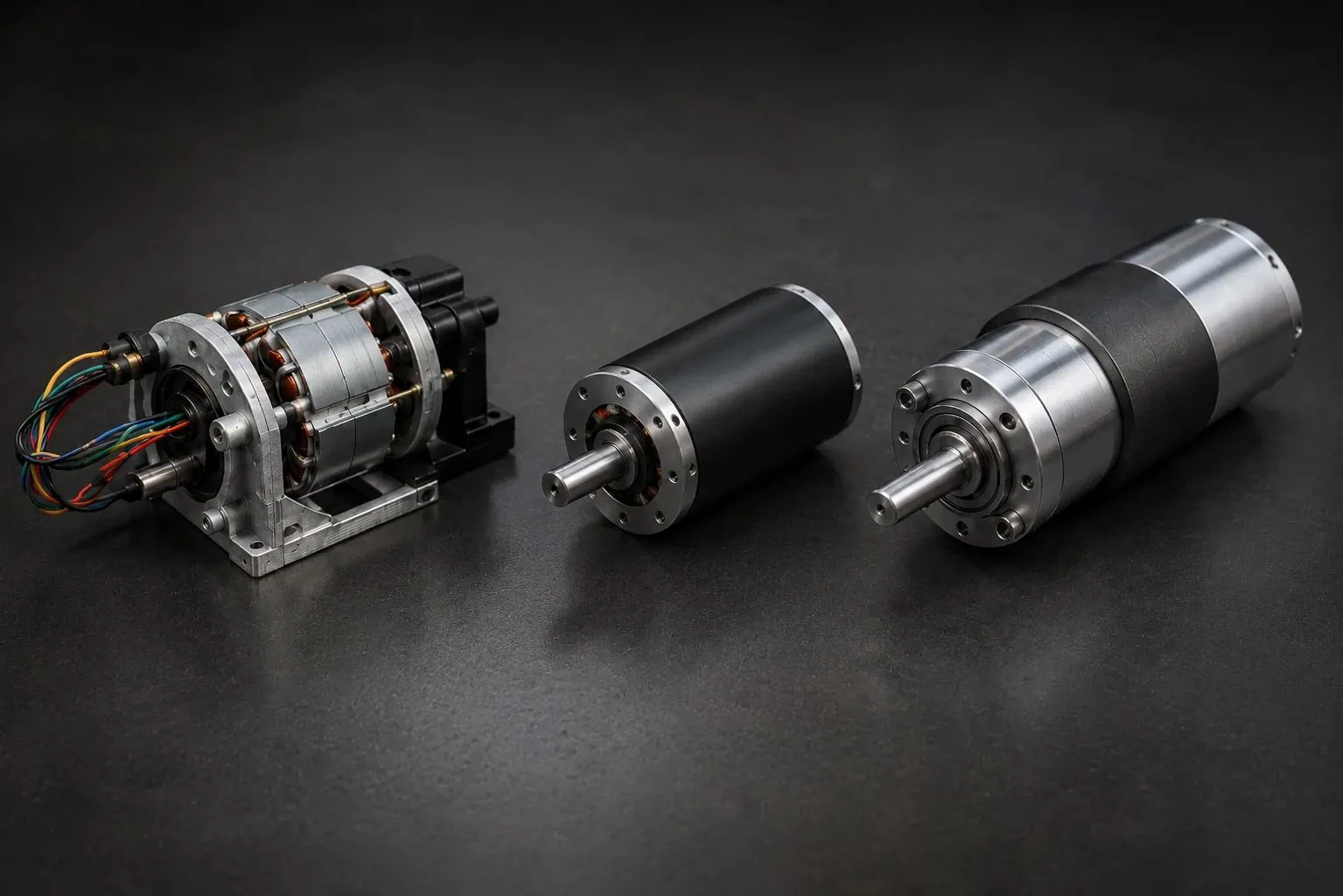
System design becomes parts: motor engineering — the electromagnetic design, magnet circuit and a winding matched to the bus — gearbox geometry with exact tooth forms and profile shift, sensor placement and interfaces, housings and seals. The drawings and specifications carry tolerances our supplier network can actually build to — checked against the manufacturing method, from injection moulding to wire-EDM prototypes — so quoting is precise and the first article looks like the model.
You receive — Complete drawing set and specifications, ready for quotation
Prototypes that answer questions
A prototype exists to close the gap between prediction and reality. Ours leave the bench with data: back-EMF measured against the specified constant, Hall alignment checked and corrected, no-load current, torque and temperature over the real duty profile. When a first prototype teaches us something — as it usually does — the loop is short: we re-dimension the winding after the first build and requalify it.
You receive — Functional prototypes, each with its measurement report
Tested against the specification, not around it
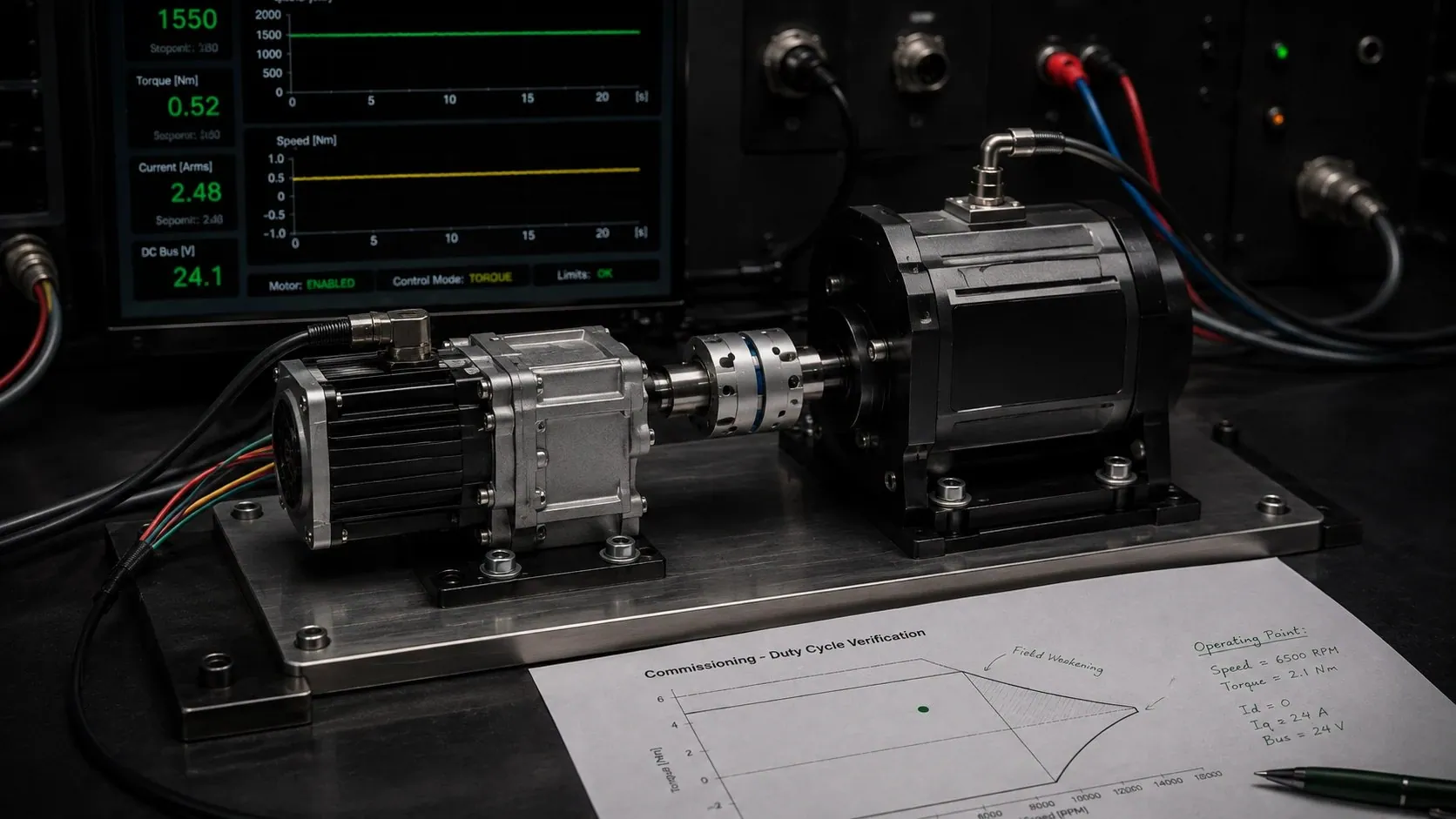
Validation replays your application, not a generic test: the duty profile on the dynamometer, thermal limits at the real ambient, lifetime against the load spectrum rather than a constant worst case. Predicted and measured values sit side by side in the report — efficiency, energy per cycle, temperature rise — so the release decision is based on evidence, and deviations are found before tooling, not after.
You receive — Validation report — predicted vs. measured, against the specification
Into series with our supplier network
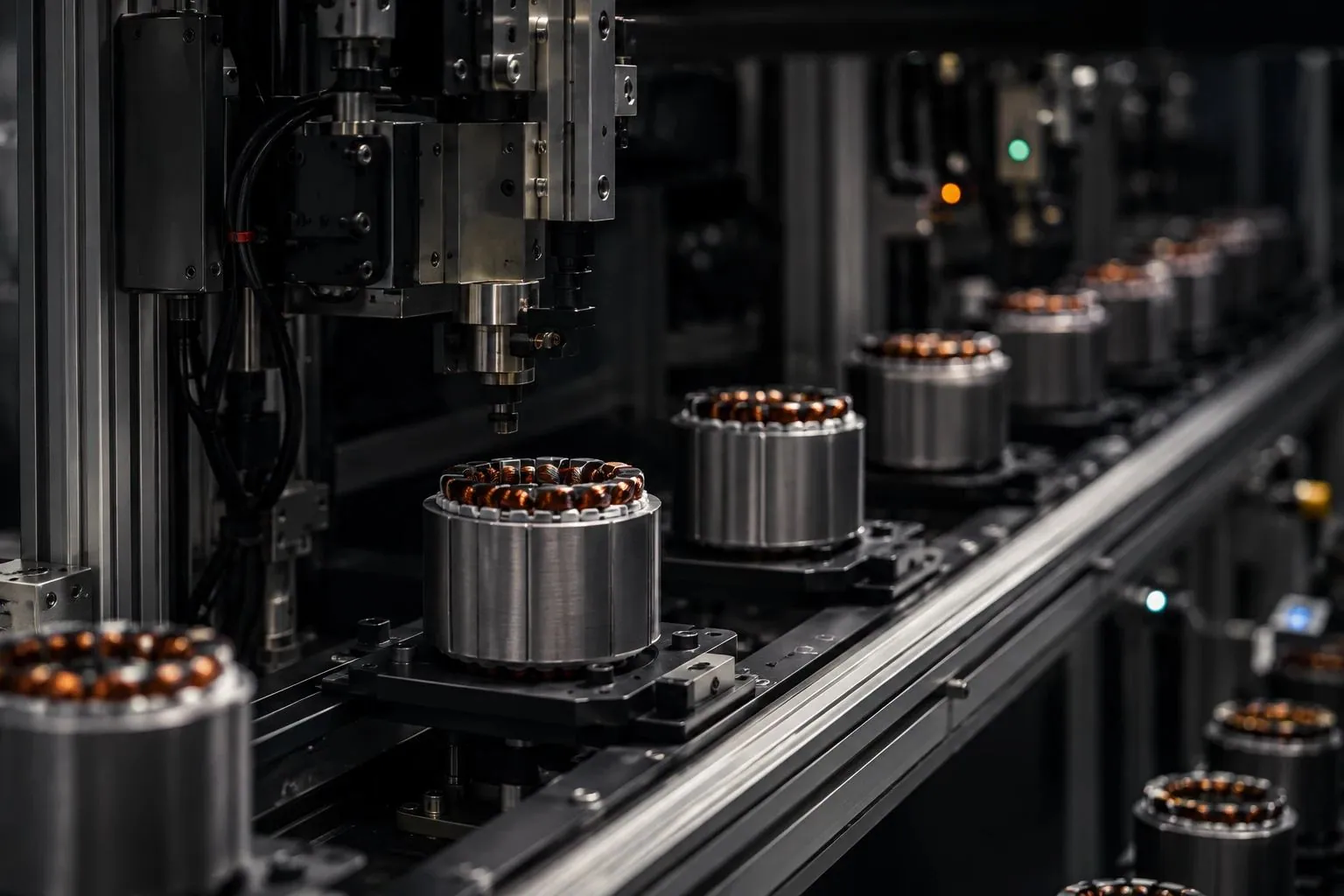
For series production the design transfers to our qualified supplier network — with sampling, first-article inspection and quality criteria drawn from the same specification the design was verified against. DRIVS stays the contract partner: we industrialise, we release, and we deliver the finished drives. You get one interface from the first sketch to the recurring shipment — with complete documentation, and the team that designed your drive stays available for the next revision.
You receive — Approved first articles, agreed quality criteria and recurring supply
custom development is where our services interlock: the same engineering that designs your drive runs cost-down on existing ones, and the same network that builds prototypes supplies the series.
How we deliver it — development happens in Austria — system design, gearbox construction and validation in-house, motor and electronics engineered to our specification with specialist partners. Manufacturing runs through our qualified network in Asia; DRIVS integrates, tests and delivers.

You talk to the engineers.
Custom development is a conversation, not a ticket queue. At DRIVS you discuss your application directly with the people who do the calculation and the design — in German or English, from Preding, Austria. Questions get engineering answers.
Start with a feasibility check.
Send us your requirement — load profile, envelope, target cost. You get a first technical assessment: is it feasible, and what would it roughly take. Happy to sign an NDA first.